
Danbury, CT · Garage Door Service
What a Garage Door Built Before Insulation Codes Actually Faces in Danbury's Cold
Most Danbury garage doors date to the 1960s and 70s, before insulation rules, and the cold climate finds every gap. Here's what to check and what it means.
- Repairs & new doors
- Springs & openers
- Serving 5 nearby communities
Checking It Yourself
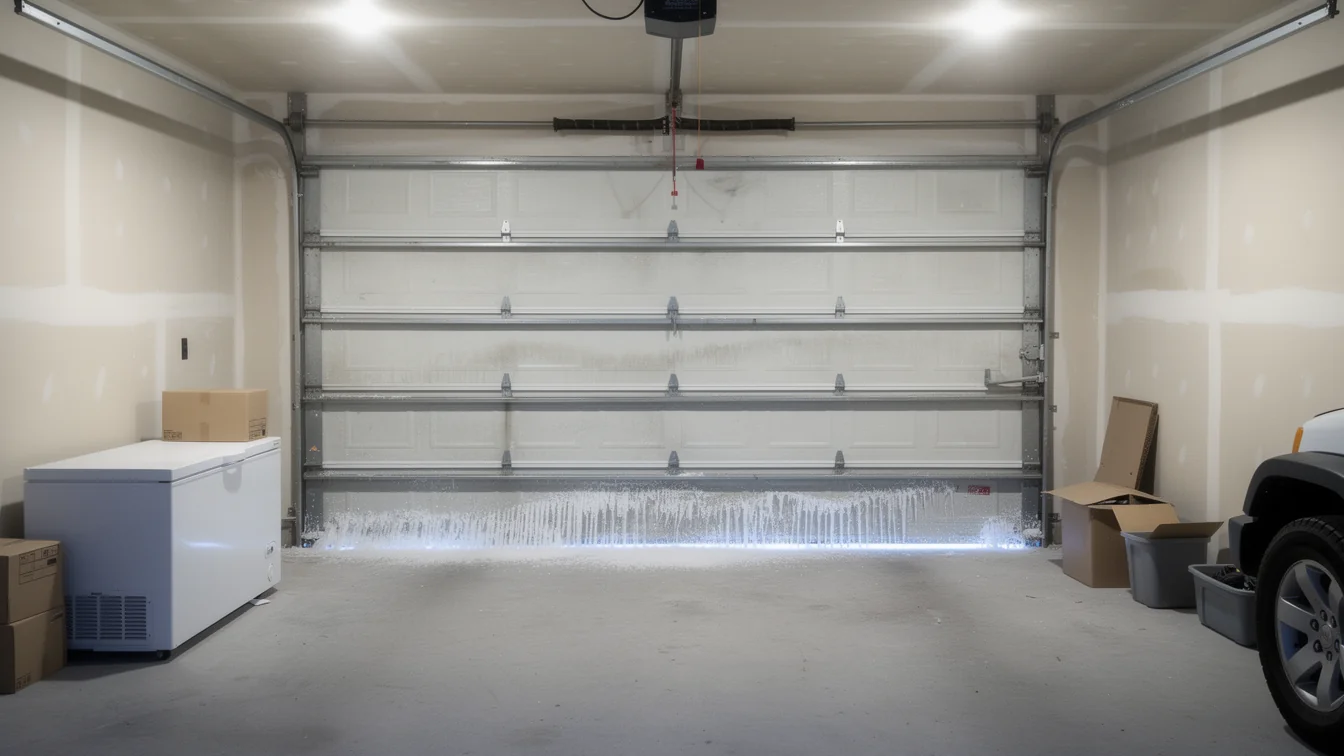
Danbury's housing stock runs from 1952 to 2013, but the median house here was built in 1972, and across the 28 named areas that make up this service territory, most of what you're looking at went up in the 1960s and 70s. That matters for your garage door because insulation requirements for residential garage doors didn't exist when these houses were framed. If your door is original to the house, or close to it, start by putting your hand flat on the inside panel on a cold morning. If it feels the same temperature as the outside air, there's no insulation layer doing anything for you. Check the bottom seal too - on a door this old the rubber has usually hardened and cracked, which is a different problem than the panel itself but shows up at the same time of year. Look at the top and sides of the door frame for daylight gaps when the door is shut. On a 1960s or 70s build, those gaps were never sealed to a modern standard, because there wasn't one. None of this tells you whether to fix or replace yet - it just tells you what you're working with.
The Common Mistake
The mistake we see most is treating a stiff, hard-to-lift door in January as a spring problem and stopping there. On a house from the 1960s or 70s stock that makes up most of this area, the spring is often fine - it's the steel panel itself contracting in the cold and binding slightly in tracks that were never designed with a thermal break in mind. Homeowners replace the spring, the door lifts easier for a few weeks, and the stiffness comes right back the next cold snap. The other version of this mistake is spraying foam insulation kit panels into an old steel door and expecting it to behave like a new insulated door. It doesn't, because the door itself - the steel gauge, the lack of a thermal break at the frame, the original hardware - predates any of the design choices that make a modern insulated door actually hold heat. Foam in the panel helps a little with sound and a little with surface temperature. It does not fix a door that was never built to the standard a 2013-built house two streets over would have met. Know which problem you're actually solving before you spend money on it.
The Problem
This area sits in a severe cold climate band, and a door built before insulation rules existed just wasn't designed around that. On a house from the 1972 median build year, the garage door is usually a single steel skin with no thermal break at the frame, no insulation in the panel, and weatherstripping that's long past useful. In a severe cold climate that combination means two things happen over a season: the steel panel itself contracts enough to change clearance at the tracks, which is what makes the door bind or feel heavy in deep cold, and moisture that gets into the garage condenses on that cold steel skin, which over years rusts panels from the inside out and rots the bottom section first. This isn't a flaw in any one door - it's what you get when a building code from fifty years ago meets a climate that gets genuinely cold for months at a time. I'll say the limitation plainly: if the bottom panel is already rusted through or the steel has rippled from repeated freeze-thaw, insulating it isn't worth the labor. At that point replacement is the cheaper fix, not the more expensive one.
What Local Conditions Do
Put the housing age and the climate together and you get a specific, predictable failure pattern rather than a vague one. A door built in the 1960s or 70s, during the decades that produced most of the stock across this area's 28 named sections, was built to a standard that assumed the garage was an unheated outbuilding, not thermal space attached to living areas. The severe cold band this region sits in means that assumption gets tested every winter, not occasionally. Add that median household income across the service area runs $143,864, which puts a full insulated-door replacement within reach for a lot of homeowners here rather than a stretch purchase - that's relevant because the honest answer, on a door this old, is often replacement over retrofit once the panel itself is compromised. None of this changes town to town by accident; it's a direct result of when this area was built out and what climate zone it sits in. A door that would be a reasonable repair candidate in a newer build fifty miles south, in a milder zone, is a different calculation here.
Frequently asked questions
Is my garage door too old to insulate?
If the panel is solid steel with no rust-through and the frame is square, adding an insulation kit can help some with temperature and noise. If the bottom panel has rust pinholes or the steel has rippled from years of freeze-thaw in this climate, insulating it is wasted labor - replacement is the better move at that point.
Why does my door get harder to lift only in winter?
On an older steel door without a thermal break, the panel contracts slightly in deep cold and changes its clearance against the track. That reads as a heavy or stiff door. It's common on houses from this area's 1960s-70s stock and isn't always a spring problem, though worn springs make it worse.
Will a new insulated door actually feel different in my garage?
Yes - a door built before insulation rules has no thermal break at the frame and a single steel skin, so cold transfers straight through. A modern insulated door with a sealed frame changes garage temperature noticeably in a climate classified as severe cold like this one.
Related garage door services in Danbury
More garage door guides
Book garage door service in Danbury
Call now or request a quote - tell us what the door is doing and where you are.