
Danbury, CT · Garage Door Service
What That Noise Is Actually Telling You
What a grinding, popping, or banging garage door actually means in Danbury homes built between 1952 and 2013, and when to stop troubleshooting and call someone.
- Repairs & new doors
- Springs & openers
- Serving 5 nearby communities
Checking It Yourself
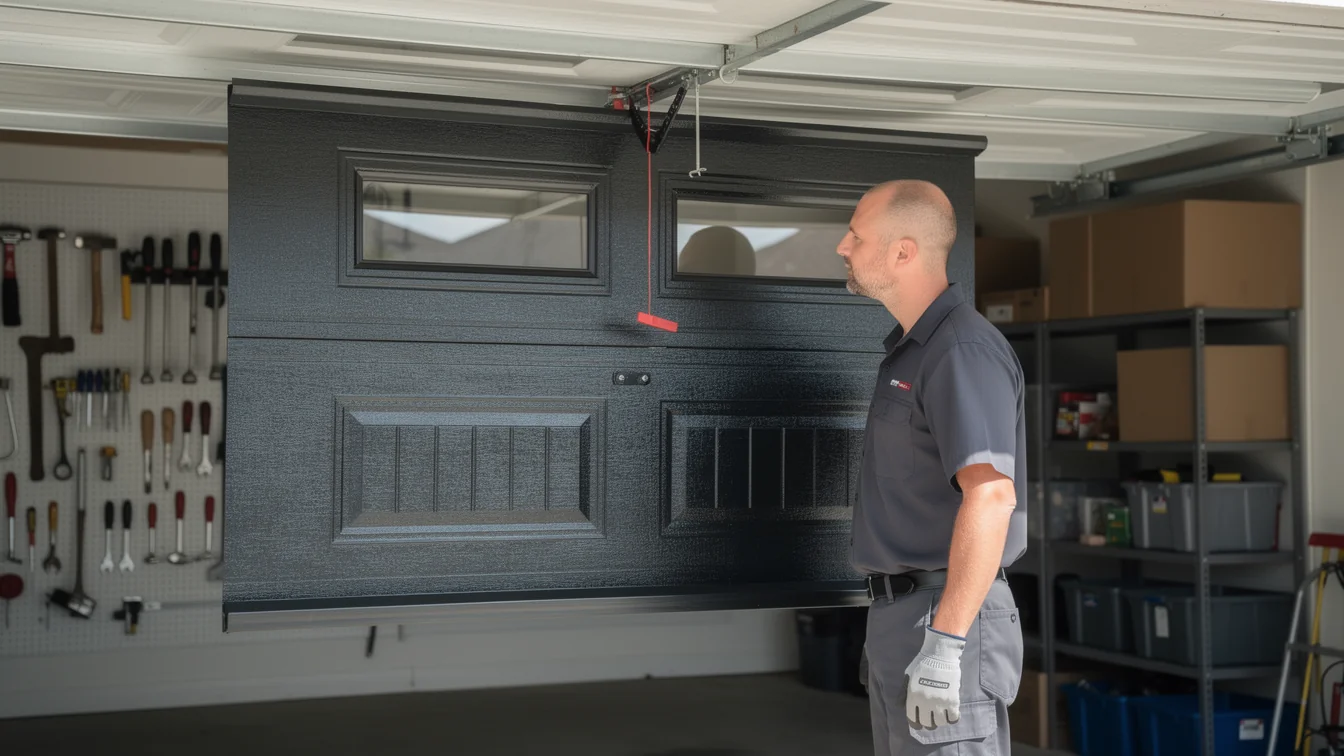
Before you call anyone, stand next to the door while someone runs it and listen for where the sound starts. A rhythmic clunk every few feet usually tracks to a bent roller or a flat spot worn into one wheel - common on doors that have been cycling since the 1970s and 80s, which covers a lot of the stock around here given the median build year of 1972. A sharp metallic pop near the top of the travel, especially on a cold morning, often points to the torsion spring losing tension, not the opener. Grinding that rises and falls with the door's speed is usually a track that's pulled slightly out of alignment, which happens more on older framing that's shifted over fifty-plus years of frost heave.
Open and close the door a few times by hand (opener disconnected) and feel for stiff spots. If the resistance is even but loud, it's lubrication or wear. If it's uneven - smooth, then a catch, then smooth - that's usually a track or hinge problem, not noise you can oil away. Write down where in the cycle it happens. That detail saves a tech a diagnostic trip.
The Common Mistake
The usual mistake is spraying WD-40 on everything and calling it maintenance. That product is a solvent, not a lubricant, and on rollers and hinges it washes out what grease is left and leaves metal dry within a week - which just makes the noise come back louder. The second mistake is assuming a noise is normal because the door still opens. A door that's cycling thousands of times a year on hardware sized for 1960s-70s construction doesn't give much warning before a spring lets go; it usually just goes from loud to silent to stuck.
The third mistake, and the costliest one, is tightening lag bolts or spring hardware yourself to quiet a rattle. On a torsion system under load, that's the single most dangerous DIY move on the whole door - a spring under tension can take a finger or worse if it releases while you're working on it. If the noise is coming from anywhere near the spring cones or the center bracket, that's the one spot where listening and documenting is the right amount of self-service.
The Problem
Danbury's housing runs from 1952 up through 2013, with most of the surrounding stock - across the roughly 28 named areas we cover, from Bethel and Ridgefield out to Newtown, New Milford, and Southbury - built in the 1960s and 70s. That means a lot of garage doors and openers out there are original or close to it, running on hardware that was standard forty-plus years ago: single torsion springs rated for lighter doors, steel tracks without the reinforcement newer doors use, and rollers that were never designed for a 50-year service life. Noise on these doors isn't cosmetic. It's the sound of hardware that's outlasted its design window.
The honest limitation here: once a track or spring is original to a house built in the 60s or 70s, patching the noise with lubricant or a tightened bracket buys weeks, not years. At some point the part is worn past tolerance and replacement is cheaper than the third service call.
What Local Conditions Do
This area sits in a severe cold climate band, and that matters more for door noise than most homeowners expect. Steel contracts in winter, which tightens tolerances on tracks and hinges that were already loose from age - so a door that's quiet in July can develop a grind or a pop in January purely from temperature, no new damage required. Grease that's fine in summer stiffens in cold, which is why a lot of noise complaints here cluster in the first hard cold stretch of the season rather than spreading evenly through the year.
Moisture matters too. Condensation inside an unheated garage corrodes spring coils and hinge pins slowly over years, and on a door with 1960s-70s hardware that's had five decades to collect rust, that corrosion is often what's actually grinding, not dirt. If your door got noisy specifically when it got cold, that's a strong clue the problem is tension and metal fatigue, not something you can lubricate your way out of permanently.
Frequently asked questions
My garage door only makes noise in cold weather - is that serious?
It can be. Cold tightens metal tolerances and stiffens old grease, so a marginal roller or spring that's fine in summer starts announcing itself in winter. On hardware from the 1960s-70s housing stock common here, that seasonal noise is often the first sign of fatigue, not just a quirk of the cold.
Can I fix a noisy garage door with lubricant alone?
Sometimes, if the noise is dry rollers or hinges on hardware that's otherwise sound. It won't fix a bent track, a worn torsion spring, or corrosion inside a hinge pin - those need parts, not oil. If the noise comes back within a week of lubricating, the problem is mechanical, not dryness.
What noise means I should stop and call someone instead of troubleshooting?
A loud bang, a sudden loss of tension, or any noise near the spring cones or center bracket. Torsion springs under load are the one part of the door that can injure you if you work on them. Document what you hear and where, and get it looked at rather than adjusting the hardware yourself.
Related garage door services in Danbury
More garage door guides
Book garage door service in Danbury
Call now or request a quote - tell us what the door is doing and where you are.