
Danbury, CT · Garage Door Service
Weather Seals and Drafts in Danbury Garage Doors
Danbury homes built mostly in the 1960s-70s wave face severe cold and worn seals. Here's what to check, what gets missed, and what actually stops the draft.
- Repairs & new doors
- Springs & openers
- Serving 5 nearby communities
Checking It Yourself
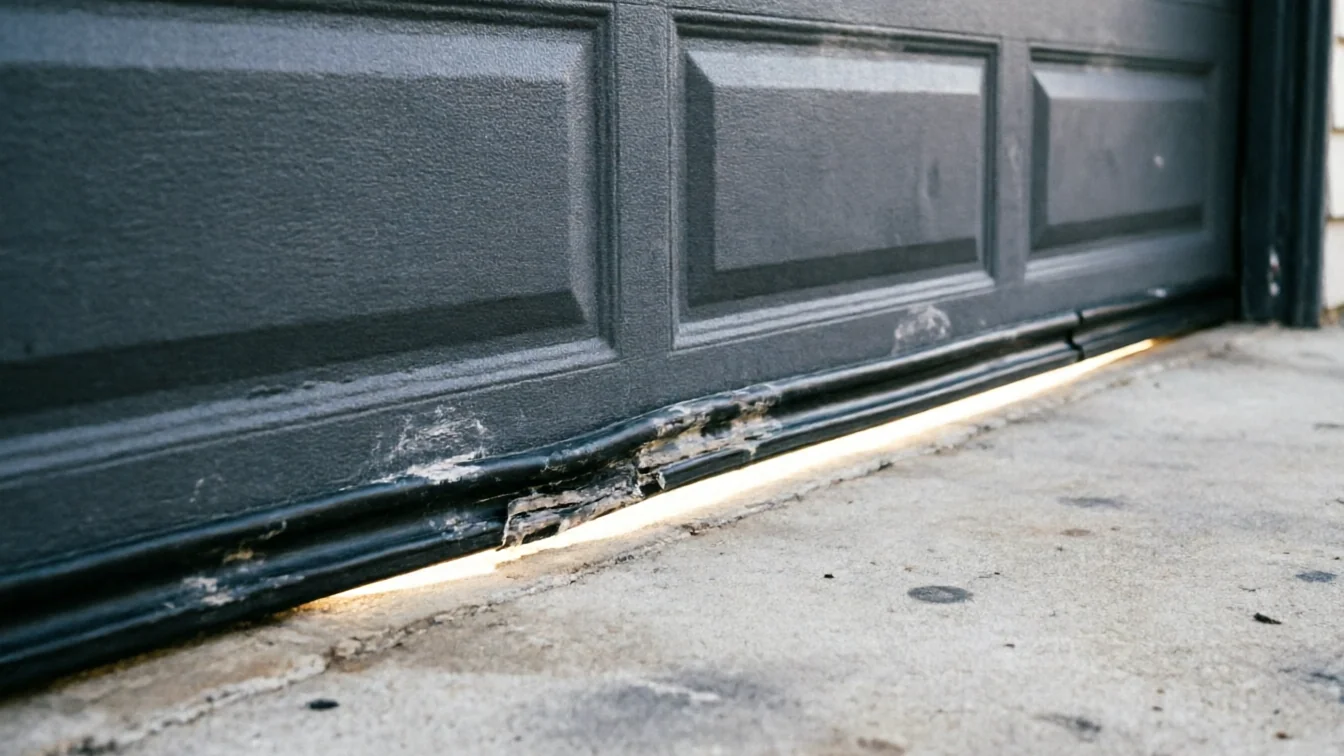
Start at the bottom of the door, not the sides. On the 1960s and 70s stock that makes up most of this area's garage doors, the original wood or aluminum jamb has usually shifted a little over fifty-plus years, so the bottom astragal is the first thing to fail even when the side seals still look fine. Run a flashlight along the floor from inside with the door down at night - if you see light, you've got a gap, and gaps let in more than air. Check the vinyl retainer on the bottom panel for cracking; on doors from the 1952-2013 build range that's common on this side of the state, that retainer dries out and splits well before the panel itself wears out. Side seals (the J-strip against the track frame) are worth a hand check - press your palm along the length with the door shut and feel for cold spots. If the garage has ever flooded or had standing water against the base, check for rot in the jamb itself, not just the seal. A door that seals tight at the top corners but leaks along the bottom few inches almost always points to a settled slab or a warped jamb, not a bad strip of rubber - and swapping the strip alone won't fix that.
The Common Mistake
The mistake we see most is buying a universal seal kit and stapling or nailing it to a jamb that's already out of square. On the housing stock common here, with median construction around 1972, door openings have settled unevenly over decades of freeze-thaw, so a seal cut to a straight edge doesn't sit flush against a jamb that's bowed by a quarter inch at the bottom corner. It looks sealed. It isn't. The second mistake is treating the bottom astragal and the side seals as one job - people replace the bottom rubber, feel the draft drop, and stop there, leaving the side J-strips original to the door. On a door that old, the side seals are usually the worse offender because they take direct wind load, not just floor contact. We also see people caulk around the frame from outside to stop a draft that's actually coming through the panel seams on an old steel door with no thermal break - caulk doesn't fix that, and it traps moisture against the jamb instead.
The Problem
Danbury sits in a cold climate band rated severe, which means the seal on a garage door isn't dealing with a few frosty mornings - it's cycling through real freeze-thaw swings most of the winter. Rubber and vinyl seals harden and crack faster under that kind of cycling than they would somewhere with a milder winter, and once a seal cracks, cold air doesn't just leak in, it carries moisture that condenses on anything metal in the garage: springs, track, the opener rail. On the 1960s-70s doors common across this area, that moisture sits against original hardware that was never built with a thermal break, so you get rust on cables and hinges faster than the seal problem alone would suggest. A drafty door in a severe-cold area also means the opener motor works harder in a cold garage, and steel panels contract enough in deep cold to open small gaps at the seams that weren't there in summer. None of that shows up as a single obvious failure - it shows up as a slowly colder garage and a slightly higher heating bill next door.
What Local Conditions Do
Put the housing age and the climate together and the pattern is pretty consistent. Across the roughly 65,911 owner-occupied houses in this service area, most still carrying garage doors or hardware original to a 1952-2013 build run with a median around 1972, severe cold cycling has had decades to work on seals that were never rated for it. That's different from a newer subdivision where the doors are ten years old with insulated panels and factory seals still doing their job. If you've had a door looked at in Bethel four miles out or Ridgefield six miles the other direction, you've likely heard the same diagnosis, because the build era and the winters don't change much across that stretch. One honest limit here: if the jamb itself has rotted or shifted out of square, a new seal is a short-term patch, not a fix - at that point you're looking at jamb repair or a full door replacement, and we'll tell you that straight rather than sell you a seal kit that won't hold.
Frequently asked questions
How do I know if it's the seal or the door itself letting in cold air?
Check for light or airflow along the bottom and sides with the door shut and the garage dark. If it's isolated to the bottom few inches, it's usually the astragal seal. If you feel drafts along the panel seams themselves on an older steel door, that's the panel, not the seal, and a new strip won't fix it.
Why does my seal crack faster than it used to?
Severe cold cycling in this area puts real freeze-thaw stress on rubber and vinyl every winter. Seals that are original or close to original on a house built in the 1960s or 70s have had decades of that cycling, so they harden and split faster than the rest of the door shows wear.
Is it worth replacing just the seal or should I replace the whole door?
If the jamb is square and the panel itself is sound, a new seal is a reasonable fix. If the jamb has shifted or rotted, or the panel seams are gapping in cold weather, a seal is a short-term patch and you're better off budgeting for the door.
Related garage door services in Danbury
More garage door guides
Book garage door service in Danbury
Call now or request a quote - tell us what the door is doing and where you are.