
Danbury, CT · Garage Door Service
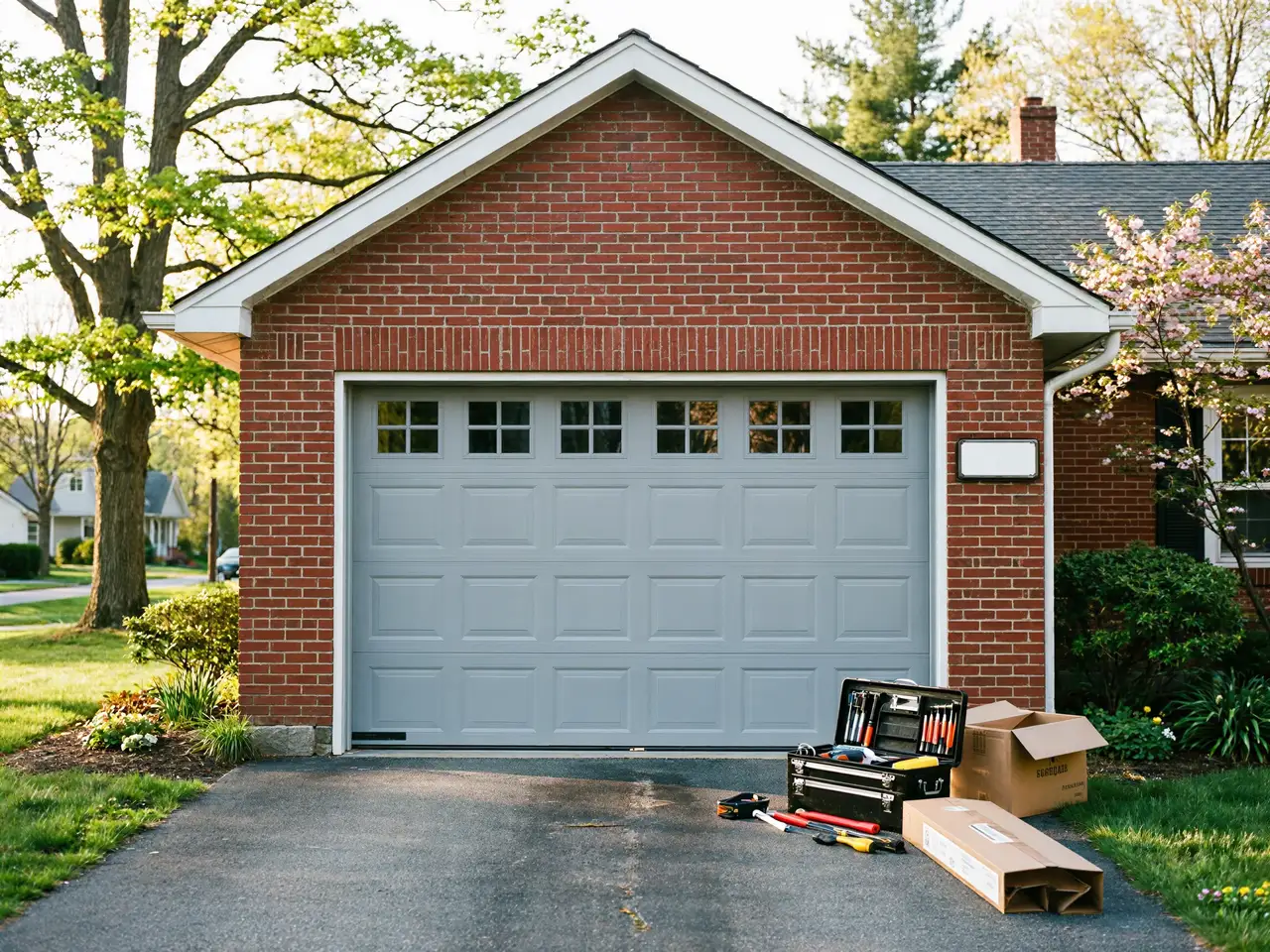
Garage Door Installation for Danbury's 1960s and 70s Housing Stock
Most Danbury homes date to the 1960s-70s building boom, with original openings sized for doors that no longer exist. We install to fit what's actually there.
- Repairs & new doors
- Springs & openers
- Serving 5 nearby communities
Why This Fails Locally
Danbury's housing stock runs from 1952 to 2013, but the median build year lands at 1972, and across the 28 named areas that make up this service territory, most of what you're looking at went up in the 1960s and 70s. That matters for installation because those houses were framed around door openings and header heights that don't match what manufacturers cut today. A lot of garages in this age band have openings that are an inch or two off standard, jambs that have settled out of square, or headers that were never built to carry a heavier insulated door.
On top of that, this area sits in a severe cold climate band. Older openings in houses from that era were framed before anyone worried much about air sealing a garage, so you'll see gaps around the jamb that let wind-driven cold straight through. When we install a new door on a house from this period, a good chunk of the job is correcting for what the original builder didn't plan for - squaring the opening, building out a jamb, or adding blocking so the new door actually seals instead of just sitting in a hole that's close enough.
This isn't a Danbury-specific defect in the houses themselves. It's just what happens when a 50-to-70-year-old opening meets a door built to a modern spec.
What You Pay
We don't have a flat number to quote you here, because what you pay depends heavily on what's behind the drywall in a house this age - whether the header needs reinforcing, whether the track needs a different mount, whether the opening has to be reframed before the door goes in. Houses built in the 1972 median range sometimes need none of that and sometimes need all of it, and you won't know until someone's hands are on the jamb.
What we can tell you is that the single biggest cost swing on an installation job in this area isn't the door itself, it's whether the opening is standard or not. A straightforward swap into a square, properly sized opening is a different job than correcting decades of settling or upgrading a header that was never built for an insulated steel door.
One honest limit: if your framing needs structural work beyond adding a header support or jamb extension, that's carpentry, not garage door work, and we'll tell you so rather than stretch the job past what we do.
What You Are Seeing
If you're looking at a door that's hard to open by hand, binds partway up the track, or lets a visible draft through the sides even when it's shut tight, you're likely seeing an opening problem rather than a bad door. On houses from the 1960s and 70s stock that makes up most of this area, we also see a lot of single-layer, non-insulated doors that were fine for the era but don't hold up against the cold band this region sits in - the panel itself is cold to the touch and the garage never warms past outside temperature.
Another common sign is a door that was replaced once already but never resized to the original opening, so it rattles in the track or needs constant adjustment. That's a patch job showing its age, not a new installation.
What Can Go Wrong
On a house with an opening this old, the risk isn't the door failing, it's the install uncovering a problem mid-job. We'll pull the old door and find a header that's rotted at the fastener points, or a jamb that's been shimmed so many times it's no longer plumb. That adds time and cost you didn't plan for, and we'd rather tell you that's possible going in than surprise you with it.
The other failure we see with severe cold winters: a door installed without proper weatherstripping or bottom seal for this climate band will let enough cold air in that homeowners end up calling us back within a season or two, thinking the door itself failed. It didn't - the seal wasn't matched to what this area actually needs through a full winter.
Frequently asked questions
Will a new garage door fit my old opening without reframing?
Often yes, but on houses built in the 1960s and 70s - which is most of this area - the opening has sometimes settled out of square or was never standard size. We measure before quoting anything so you're not guessing.
Do I need an insulated door given how cold it gets here?
For this climate band, an insulated door with a proper bottom seal makes a real difference in how much cold air transfers into an attached garage. It's one of the first things worth upgrading if your current door is a single layer panel from the original build.
How do I know if it's a door problem or a framing problem?
If the door binds in the track, won't seal at the bottom, or has always needed extra force to move, that often points to the opening rather than the door itself. We'll check the jamb and header before recommending a fix.
Book garage door service in Danbury
Call now or request a quote - tell us what the door is doing and where you are.