
Danbury, CT · Garage Door Service
Is Your Danbury Garage Door Worth Fixing, or Worth Replacing
Danbury homes mostly date 1952-2013, many from the 1960s-70s. Here's how to tell if your original door and hardware are worth repairing or past it.
- Repairs & new doors
- Springs & openers
- Serving 5 nearby communities
Checking It Yourself
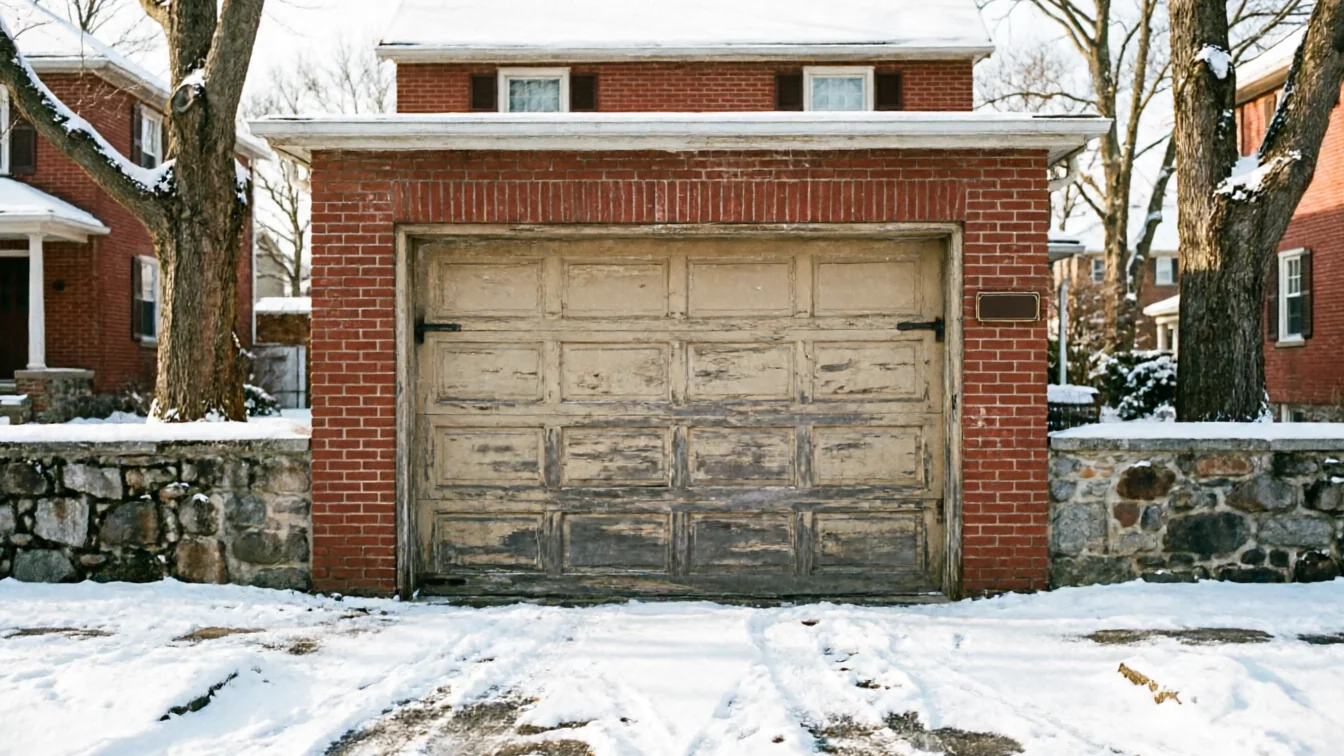
Walk out and look at the door from the driveway, not the inside. If it's original to a house built in the 1960s or 70s - which covers a big share of homes around here - you're likely looking at a steel or fiberglass door with a single torsion spring and a drum-style hardware setup that nobody stocked fresh parts for in a long time. Check the bottom panel for rust-through, not just surface flaking; coastal towns worry about salt, but inland Danbury winters are about repeated freeze-thaw cycling that works moisture into seams. Push the door up by hand with the opener disconnected. If it's heavy or drops fast, the spring is losing tension, not broken yet. Listen for grinding at the rollers - on a door this age, steel rollers in worn tracks are common and it's cheap to confirm before you call anyone. One thing you can't check yourself: whether the torsion spring is rated correctly for the door weight. That takes a spring gauge and someone who won't eyeball it.
The Common Mistake
The mistake we see most in this area is replacing the opener and calling the job done, while the door itself - original to a house built sometime in that 1952 to 2013 window, median around 1972 - still has the hardware that caused the problem in the first place. A new opener on a tired torsion spring just means a stronger motor fighting worn parts, and it fails again within a year or two. The other version of this mistake is the reverse: homeowners replace the spring and skip the track and rollers, because the spring is the part that makes noise when it goes. On a door this old the track has usually shifted slightly over fifty-plus years of settling, and a new spring on a bent track still binds.
The Problem
Danbury sits in a cold-severe climate band, and that matters more for garage doors than people expect. Steel contracts in deep cold, and on a door old enough to have its original weatherstripping and seals, that contraction opens gaps at the bottom and sides that weren't there when the door was installed decades ago. Water gets in, freezes, and the next cycle it's ice working against the panel seams. Combine that with hardware sized to 1960s-70s building standards - thinner gauge steel, smaller springs than what's spec'd today - and you get a door that's structurally fine but mechanically undersized for the cold load it's handling now. That's the real problem on most of these older Danbury houses: not that the door is broken, but that it was never built for the weather it's been doing for fifty years.
What Local Conditions Do
With median household income in the service area at $143,864 and most of the 65,911 owner-occupied houses dating to that 1952-2013 build window, a lot of Danbury homeowners are sitting on a door that's cosmetically dated but structurally sound enough to keep - if the spring and hardware get upgraded to handle the cold-severe swings instead of just patched. Our honest limitation: if the panels themselves are rusted through at the bottom or the door is out of square from foundation settling, we're not going to spend your money re-hanging hardware on a frame that's already lost. In that case replacement is the cheaper fix over five years, not the repair. But a sound door from the 60s or 70s with tired springs and a drafty bottom seal is almost always worth saving - that's the majority of what we see on this side of town.
Frequently asked questions
My garage door is from the 1970s - is it too old to repair?
Age alone doesn't decide it. A lot of Danbury houses built in that era still have structurally sound steel doors; what fails is the spring, rollers, and weatherstripping, not the panel itself. If the frame is square and the panels aren't rusted through, repair almost always makes sense before replacement does.
Why does my older door get harder to lift in winter?
Steel contracts in cold, and on an older door the original weatherstripping has usually hardened and shrunk. That lets cold air and moisture in, which stiffens the track and can throw off spring tension. In this climate band that's a seasonal pattern, not a sign the door is failing.
Should I just replace the opener instead of fixing the door?
Only if the door and hardware are sound. A new opener on a worn torsion spring or bent track just stresses the new motor the same way it stressed the old one. We'd rather check the spring and track first and tell you honestly which part actually needs the money.
Related garage door services in Danbury
More garage door guides
Book garage door service in Danbury
Call now or request a quote - tell us what the door is doing and where you are.