
Danbury, CT · Garage Door Service
Why Your Garage Door Jumps the Track
Danbury's 1960s-70s housing stock and cold winters push garage door tracks out of alignment. Here's what actually causes it and what to check first.
- Repairs & new doors
- Springs & openers
- Serving 5 nearby communities
Checking It Yourself
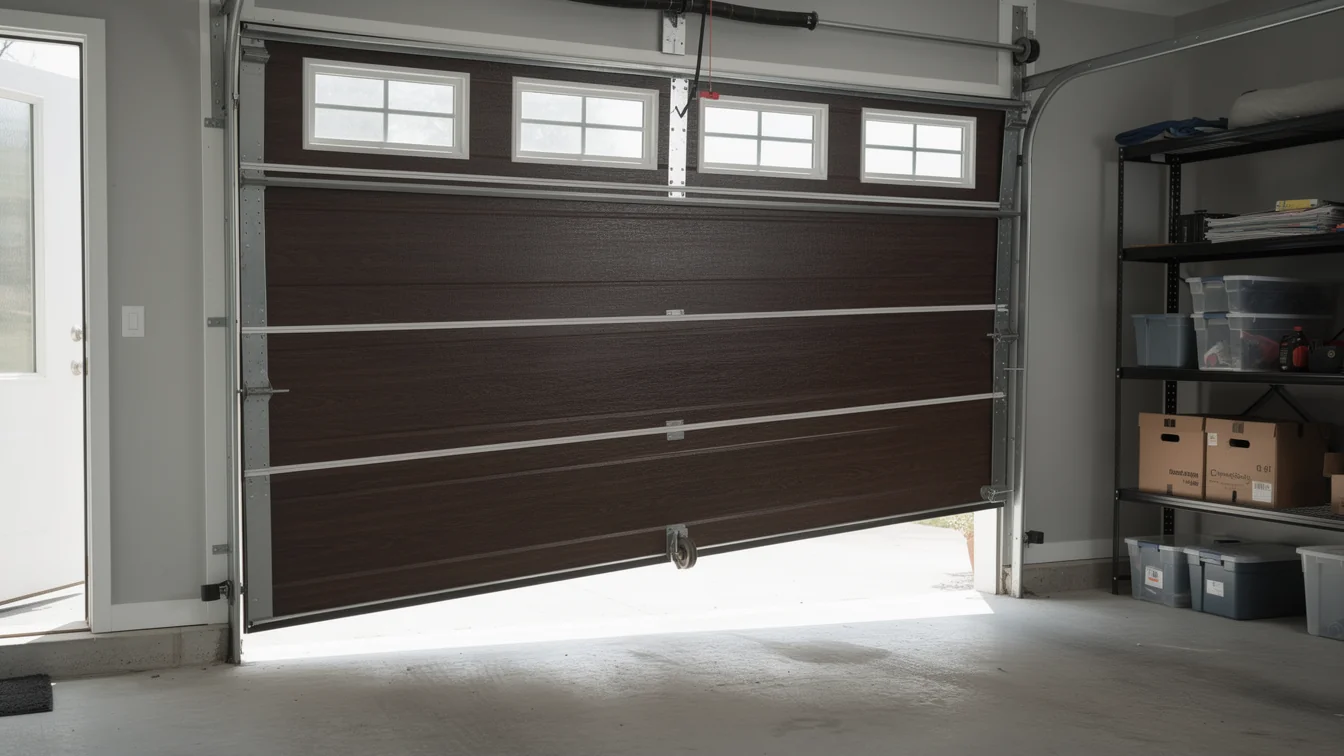
Before you call anyone, open the door halfway and look at the gap between each roller and its track. On a lot of Danbury houses built in that long run between 1952 and 2013 - with the bulk of the stock from the 1960s and 70s - the track brackets were bolted to wood jambs that have since shrunk, swelled, and shrunk again through forty or fifty winters. That movement loosens the lag screws holding the track to the frame, and a loose bracket lets the whole track rack sideways a quarter inch at a time.
Run your hand along the vertical track section near the bottom roller. If you can wiggle it side to side, that's your answer - the door isn't broken, the track mount is. Look next at the horizontal track up by the ceiling. On older torsion setups common in this housing stock, the rear track hanger is often a single strap, and those stretch or tear loose from truss movement over time.
One honest limitation: if the track itself is bent rather than just loose, tapping it back into shape rarely holds. A bent track is a track you replace, not one you hammer straight and hope.
The Common Mistake
The common mistake around here is assuming a door that's binding or popping off the track needs new rollers. Rollers wear out, sure, but on houses from the 1960s and 70s the more frequent cause is the wood jamb behind the track flexing with the seasonal swing between a humid Danbury summer and a cold, dry winter. People replace the rollers, the door runs fine for two weeks, and then it jumps again because nobody touched the loose bracket that caused the wear in the first place.
The other version of this mistake: tightening every bolt on the track as hard as it'll go. On the older galvanized track sections still found on original garage doors in this area's 1950s-70s homes, overtightening pulls the track inward and narrows the channel, which binds the rollers instead of fixing the alignment. The fix is aligning the track plumb first, then snugging the hardware - not cranking down on whatever's already there.
The Problem
Danbury sits in a severe cold climate band, and that matters more for door alignment than most people expect. A steel track expands and contracts with temperature, and on an unheated garage that swings from near zero on a January night to 60-plus degrees by afternoon sun on the door, that daily flex works every fastener loose a little faster than it would in a mild climate. Over a house built in the early 1970s - right around this area's median build year - that's fifty-plus winters of expansion and contraction on the same bracket holes.
Combine that with wood jambs that were never going to stay perfectly square for five decades, and you get a track that's technically still attached but no longer running true to the door panel. The door doesn't need to hit anything to jump - it just needs the track to drift out of plumb by enough that a roller catches the lip instead of riding inside the channel.
What Local Conditions Do
In a severe cold climate, track hardware takes a different kind of abuse than it would somewhere mild. The steel contracts in deep cold, which can shrink clearances just enough that a roller that was fine in August binds in February. That's also when cables run tightest and springs carry the most tension relative to their rated travel, so a misaligned track under cold-weather tension is more likely to pop a roller clean out of the channel rather than just scrape along it.
Houses in this area built across six decades - from 1952 up through 2013 - don't all have the same hardware. A 1960s build with original steel track behaves differently in the cold than a 2000s build with a vinyl-lined track and better-sealed jambs. If your house falls on the older end of that range, expect the bracket and jamb issue described above. If it's newer, off-track problems are more often a worn roller or a spring losing tension than a structural alignment issue.
Frequently asked questions
Why does my garage door only jump the track in winter?
Steel track contracts in cold weather, tightening clearances that were fine in warmer months. In a severe cold climate like Danbury's, that seasonal swing is sharp enough to turn a slightly loose or misaligned track into one that lets a roller pop free, especially on older homes where the bracket hardware has already loosened over the decades.
Is a bent track worth straightening instead of replacing?
Usually not. A track that's cosmetically scuffed can sometimes be realigned, but once it's visibly bent it tends to re-bend at the same spot under spring tension. On most jobs we see, replacing the bent section costs less in the long run than repeated straightening visits.
My house is from the 1960s - does that make this more likely?
Yes. A lot of Danbury's housing stock dates to that decade, and original track brackets on wood jambs from that era have had fifty-plus years of seasonal wood movement working the fasteners loose. It's one of the most common off-track causes we see on houses built in that window.
Related garage door services in Danbury
More garage door guides
Book garage door service in Danbury
Call now or request a quote - tell us what the door is doing and where you are.