
Danbury, CT · Garage Door Service
Garage Door Service for New Fairfield's 1969-Era Housing Stock
New Fairfield homes run about three years older than the wider Danbury service area median. That gap changes which spring and track hardware you're dealing with. Service from Danbury, 6 miles out.
- Repairs & new doors
- Springs & openers
- Serving 5 nearby communities
What the Fix Involves
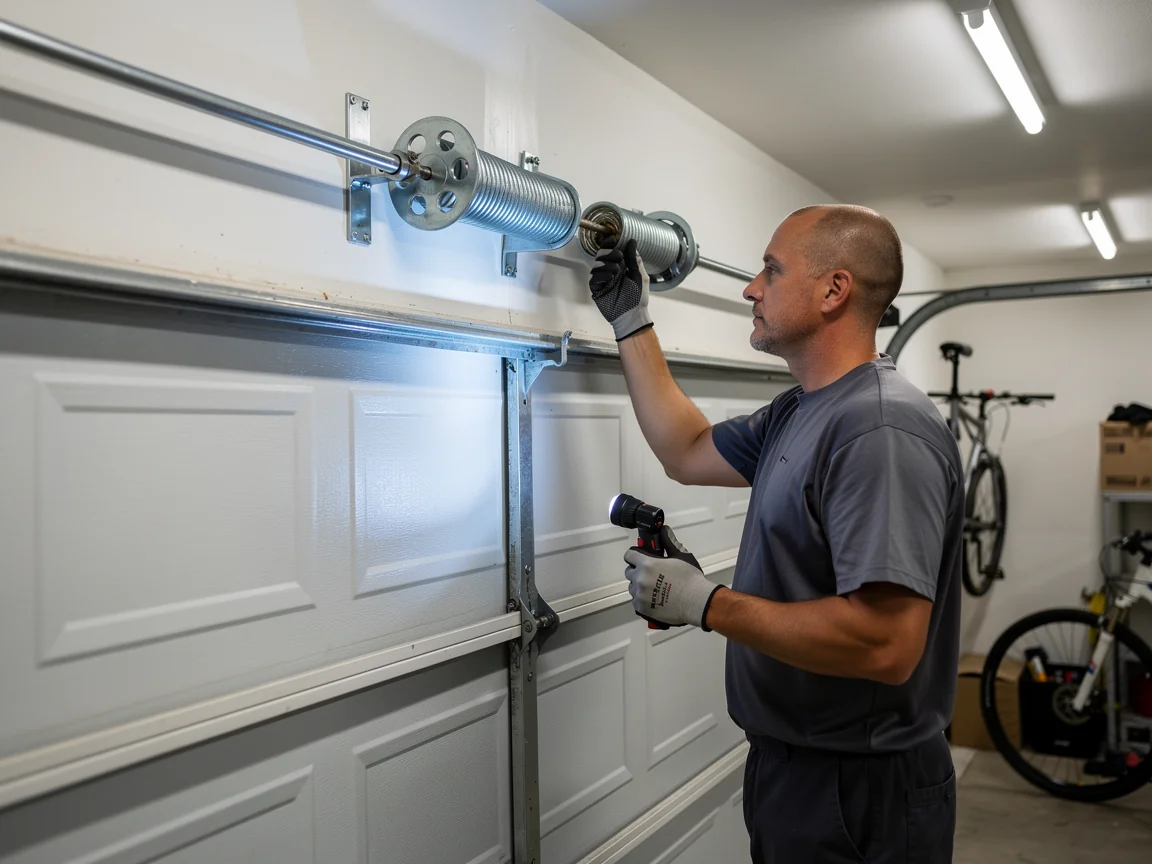
Danbury Garage Door Pros covers New Fairfield from six miles away, and the first thing that's different about a call out here isn't the drive - it's the door on the other end of it. The wider service area's housing stock runs a median build year of 1972 across 95,439 households. New Fairfield's roughly 4,500 households center closer to 1969, which doesn't sound like much of a gap until you're standing in front of the opener. Three years put a lot of doors here right at the edge of the extension-spring-to-torsion-spring transition that shows up site-wide by the early 1970s. A door from 1969 is more likely to be running on a pair of extension springs with safety cables added later, or retrofitted hardware from a repair twenty years back that doesn't match what came stock. The fix starts with figuring out which era of hardware you actually have on the wall, not assuming it matches the newer builds a few miles over. Median household income in the area sits at $143,864, which tends to mean owners replace rather than patch indefinitely - but only once they know what's actually wrong, and that takes someone looking at the springs, not guessing from the symptoms.
Why This Fails Locally
The service area sits in a cold, severe climate band, and steel expands and contracts with every freeze-thaw cycle through a New Fairfield winter. On a door built close to 1969, that cycling has had an extra few years to work on hardware that was already a step behind the torsion-spring setups that became common by the early '70s. Extension springs don't fail the same way torsion springs do - they stretch, fatigue unevenly, and the safety cables meant to catch a broken spring are often an add-on rather than original equipment. Add a winter's worth of cold-stiffened grease in the tracks and rollers that haven't been serviced, and you get binding that looks like a motor problem but isn't. None of this is dramatic. It's just older parts doing older-parts things a little sooner than they would somewhere with a newer median build year. That's the whole case for treating this as a 1969-era door, not a generic one.
What You Are Seeing
On a lot of these doors, the complaint starts as the door hesitating a few inches off the floor, or closing unevenly on one side. That's usually a spring losing tension unevenly rather than a photo-eye issue, which is the first place people look on anything built in the last fifteen years. Grinding or popping on the way up points to original rollers that have never been swapped - steel on steel after fifty-plus years of winters. If the door reverses right after it touches the floor, check the extension spring cables before assuming it's the opener's force setting; a stretched cable throws that reading off. Rust streaking down from the spring mounts is common on doors from this era that haven't had the springs replaced since the house was built, and it's often the first visible sign that a spring is near the end of its cycle count, not just cosmetic.
How Long It Takes
A straightforward spring replacement on this kind of door is a single visit - remove the old hardware, match the door's weight and track geometry to the correct new spring, and run it through a full open-close cycle before leaving. Where it runs longer is when the original hardware is nonstandard, which happens more on older builds where a past repair used whatever was on the truck at the time rather than the right part for that door. Track realignment and roller replacement add time if the door's been binding for a while, since a misaligned track usually means more than one roller has taken damage. We don't quote a fixed window over the phone before seeing the door, because a 1969 door's actual condition varies more than a newer one's does - that's the honest limitation here, not a stall tactic.
Doing It Yourself
Lubricating hinges, rollers, and the track with the right product, and keeping the weatherstripping clear of debris, are fine to handle yourself and worth doing every season in a cold climate like this one. Tightening visible hardware with the door closed is reasonable too. What isn't worth attempting is anything involving the springs themselves - torsion or extension, old hardware or new. A spring under tension on a door this age, with cables and anchor points that may not match current standards, is not a safe place to learn as you go. If the door is sagging, reversing on its own, or came down hard once already, that's a call-it-in situation, not a weekend project. On original-era hardware specifically, replacement of the full spring assembly is often the right call rather than patching one failed component, since the rest of the set is usually close behind it.
Frequently asked questions
Is New Fairfield's housing stock really different from the rest of the Danbury area?
Yes. The wider service area's median build year is 1972 across 95,439 households, while New Fairfield centers closer to 1969. That few years puts more New Fairfield doors at the edge of the extension-spring-to-torsion-spring shift that became standard shortly after, which affects which hardware shows up on a service call here.
Do you have a branch in New Fairfield?
No. Danbury Garage Door Pros works out of Danbury and covers New Fairfield from about six miles away. There's no local depot here - every job travels in from Danbury.
Why does my door bind more in winter?
The area sits in a cold, severe climate band, and steel track and hardware contract in low temperatures. On older doors, especially those with original rollers or extension-spring setups from around 1969, that contraction shows up as binding or grinding sooner than it would on newer hardware.
Can I just tighten or lubricate my own door instead of calling?
Lubricating hinges, rollers, and track, and clearing debris from the weatherstripping, is safe to do yourself and worth doing seasonally. Spring work isn't - a spring under tension on an older door is not something to troubleshoot without the right tools and experience.
More garage door services in New Fairfield
Book garage door service in Danbury
Call now or request a quote - tell us what the door is doing and where you are.