
Danbury, CT · Garage Door Service
Off-Track Garage Door Repair for New Fairfield, CT Homes
New Fairfield homes mostly went up around 1969, with extension-spring hardware that jumps track differently than newer doors. Danbury Garage Door Pros covers the 6-mile run.
- Repairs & new doors
- Springs & openers
- Serving 5 nearby communities
What the Fix Involves
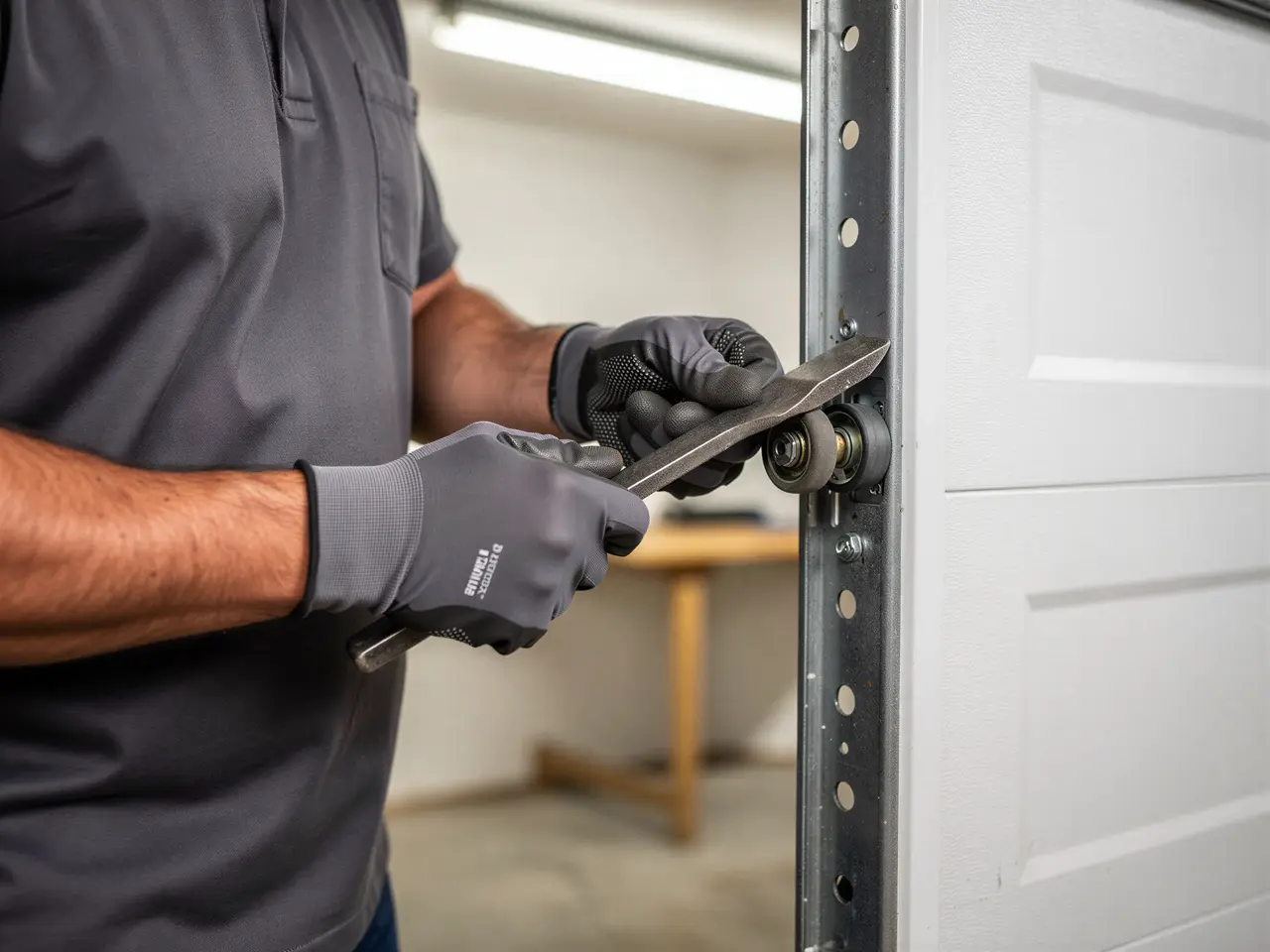
Most houses in New Fairfield went up around 1969, which puts a lot of doors here on extension-spring hardware riding on horizontal tracks bolted to the framing above the door, not the torsion-spring setups you'll find on anything built after the mid-1980s. When a door jumps that older track style, the fix usually starts with releasing tension on the extension springs safely before we touch the rollers, because those springs don't hold tension the way a torsion bar does and they can whip if you pull a roller out first. We re-seat the rollers in the track, check the track brackets for bent flanges (common on this hardware once a cable frays), and square the track against the jamb before locking it down. If the door's been forced back onto the track by hand, we check the panel seams too, since that's where a stressed door usually shows it first. We don't force a 1969-era track back into shape if the steel's already bowed from repeated impact - at that point it gets replaced, not bent back.
Why This Fails Locally
A door built for mid-century extension-spring hardware depends on cable tension staying even on both sides of the track. In this corner of the service area, winters sit in the severe-cold band, and that cold makes old lubricant inside the roller channel stiffen up, so one side of the door drags a half-second behind the other on the way down. That small lag is enough to walk a roller off the lip of a 50-year-old track, especially once the track brackets have loosened from decades of thermal expansion and contraction. Newer doors with torsion springs and sealed roller bearings shrug this off. Older New Fairfield stock doesn't, because the hardware simply wasn't built with today's temperature swings in mind.
What You Are Seeing
The usual signs: the door looks crooked in the opening, one bottom corner sits lower than the other, or the door stops partway and the opener strains against it. Sometimes a cable has slipped its drum and you'll hear a slap or grind instead of a smooth roll. On the older extension-spring doors common here, you might also notice the spring itself hanging loose at an angle instead of running parallel to the track - that's a sign the anchor bracket let go, not just the roller. If the opener keeps trying to close a door that's visibly off its track, stop running it. Every cycle after that first jump chews up the track rail a little more and turns a bracket fix into a track replacement.
How Long It Takes
A straightforward off-track call, where the rollers just need re-seating and the track re-squared, is a same-visit job. Where the track itself is bent or a bracket has pulled loose from the jamb on an older frame, we're drilling and resetting hardware, which takes longer but is still typically one visit. We're coming from Danbury, about 6 miles out, so travel isn't the bottleneck - the variable is what the hardware looks like once we're actually under the door. On houses from this era, if the track is original from 1969, we'll tell you straight whether it's worth repairing or whether the whole rail needs swapping, since patched 50-year-old steel track doesn't hold alignment the way new track does.
Doing It Yourself
If the door's off track but the opener is disconnected and the door is resting still, it's generally safe to look at - don't try to force it back onto the rail yourself, especially on extension-spring doors, because the spring tension on that hardware isn't contained the way it is on a torsion setup, and a DIY attempt can snap a cable under load. What you can safely do: pull the manual release, see if the door moves freely by hand, and note whether one side binds more than the other - that tells us a lot before we even arrive. What we'd rather you not do is re-tension a loose extension spring yourself. On a house built in the 1960s, that hardware has had decades to fatigue, and a spring that looks fine can fail without warning once it's reloaded.
Frequently asked questions
Why does my garage door keep jumping the track in winter?
Cold stiffens the lubricant in the roller channel and tightens tolerances in old track brackets, so one side of the door lags the other on the way down. In the severe-cold band this area sits in, that lag is enough to walk a roller off a decades-old track rail, especially once the bracket hardware has loosened over the years.
Is my door's hardware too old to repair?
Not usually. Extension-spring hardware from houses built around 1969 can be repaired - rollers, cables, and brackets are all serviceable parts. The one thing we won't do is bend a badly warped track back into shape; once the rail itself is bowed, replacement holds alignment better than a patched repair.
How far out is New Fairfield from your Danbury base?
About 6 miles. We travel from Danbury to handle calls here; there's no separate branch in New Fairfield, just the one crew covering this part of the service area.
Can I push the door back onto the track myself?
We'd rather you didn't, particularly on older extension-spring doors. The spring tension on that hardware isn't enclosed, and forcing a roller back into a bent track can snap a cable. Disconnect the opener, leave the door where it sits, and call it in.
More garage door services in New Fairfield
Book garage door service in Danbury
Call now or request a quote - tell us what the door is doing and where you are.